For a small to medium-sized enterprise (SME) without a dedicated internal HR team, managing a redundancy process can feel like navigating a minefield. A single misstep can lead to costly employment tribunal claims. This case study from a recent project managed by People Based Solutions demonstrates how we successfully guided a 50-employee Transport Company through a complex redundancy situation. We ensured compliance and fairness throughout. The process highlights that for a fair redundancy, the consultation requirements are the same regardless of business size.
The need for redundancies
The Transport Company needed to cease transporting a specific type of cargo. This cargo required fewer qualifications and skills than their other operations. This strategic decision meant closing an entire department of 10 HGV drivers, a large portion of their workforce. While some drivers had standard licences, not all possessed the HGV licence needed for other roles. Consequently, this made a fair redundancy selection particularly sensitive. Therefore, People Based Solutions’ primary goal was to guide them through a legally sound redundancy consultation process, mitigating the risk of unfair dismissal claims.
At risk of redundancy meeting
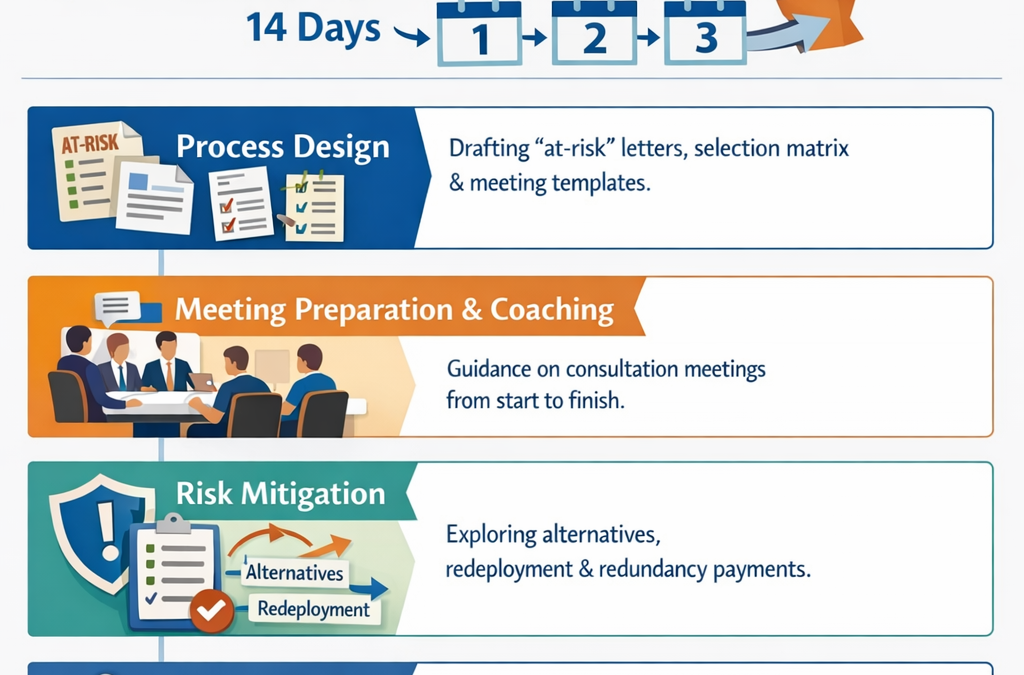
Our first step was to advise on the “at-risk” meeting. We recommended holding this initial redundancy consultation as a group meeting. We informed the drivers why their roles were at risk. Moreover, we stressed the importance of clear communication and transparency from the outset. We ensured the company explained that while three driving positions were available elsewhere, the selection for these roles would be based on skills and experience. Following this, we drafted a formal “at-risk” letter. This letter provided clear evidence that the redundancy consultation had commenced and was being taken seriously.
The second redundancy consultation
Next, we oversaw the second stage of the redundancy consultation, which transitioned to individual meetings. Here, we guided the employer to review the minutes from the first meeting. We also helped them reiterate the rationale for the proposed redundancy. Additionally, we coached the manager on how to encourage genuine two-way dialogue. This involved inviting the employees to put forward any suggestions to avoid job losses. Crucially, we introduced a redundancy selection matrix to ensure objectivity. We left a copy with each employee for their consideration, thereby embedding fairness into the redundancy process.
The final stage
The final stage of the redundancy consultation was the most critical. We prepared the company for this final meeting, where the employee is entitled to be accompanied. We advised on how to review the consultation process and address any final proposals. We also showed them how to demonstrate they had thoroughly considered alternative employment. Furthermore, we guided them on documenting offers of alternative roles and providing draft financial statements. We also explained statutory redundancy pay, making the final stage of the redundancy clear and transparent. Nevertheless, we stressed one crucial point: terminating employment must happen only after these steps have been meticulously followed and documented.
Ultimately, by providing expert guidance through every stage, People Based Solutions transformed a high-risk process into a structured and fair redundancy. This case study underscores that any business conducting a redundancy must be prepared for a thorough consultation. For SMEs without an internal HR department, seeking expert advice is not just a good idea—it is essential. It helps navigate the legal complexities, ensure fairness, and conduct a compliant and successful redundancy process.
Redundancies are often emotional but necessary. Are you confident that you know what to do to treat affected staff sensitively amd lawfully? If you have any questions: Contact us at People Based Solutions today call us on 01925202217, e-mail us at enquiries@peoplebasedsolutions.co.uk