 If you’re an SME owner or the person in your business who “looks after HR” alongside a dozen other duties, the incoming new protections for pregnant employees might feel like just another thing on your ever-growing to-do list. But these changes – expected to land in 2027 – are significant enough that getting across them now could save you a major headache later.
The Employment Rights Act 2025 is set to introduce some of the most significant changes to UK employment law in recent years. For businesses with between 5 and 50 employees, where HR is often handled by an admin or PA rather than a dedicated professional, understanding these shifts is essential. Let’s break down what’s changing, when, and what you need to do about it.
Current Protections: What’s Already in Place?
Before we look at the new protections for pregnant employees, it helps to understand the current legal landscape. Under the Employment Rights Act 1996 and the Maternity and Parental Leave Regulations 1999, it’s already automatically unfair to dismiss an employee for a reason connected with pregnancy, maternity leave or childbirth – regardless of the employer’s justification. This protection applies from day one, with no qualifying service required.
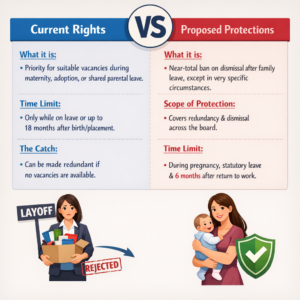
The Equality Act 2010 adds another layer by prohibiting unfavourable treatment because of pregnancy or maternity leave. And since April 2024, redundancy protections have been extended so that employees on maternity leave have priority for suitable alternative vacancies from the point pregnancy is disclosed through to 18 months after birth.
What Are the New Protections for Pregnant Employees Coming in 2027?
Sections 26 and 27 of the Employment Rights Act 2025 give the government powers to make regulations about dismissals during or after a protected period of pregnancy, maternity leave or other family leave. The government intends to use these powers to make it automatically unfair to dismiss a pregnant employee or new mother until at least six months after their return to work, except in limited circumstances.
In practice, from 2027 it will become unlawful to dismiss an employee during pregnancy, while on maternity, adoption or shared parental leave, or within six months of their return – subject to limited exceptions such as gross misconduct or illegality. This extends protection beyond redundancy dismissals to cover any dismissal.
The government consulted on how these new protections for pregnant employees should work, with the consultation closing on 15 January. While the formal response is still pending, several approaches are under consideration:
-
A stricter fairness test permitting dismissal only in specified circumstances, such as significant business detriment or serious health and safety risks
-
Narrowing the range of potentially fair reasons available, limiting an employer’s ability to rely on categories like capability or “some other substantial reason”
-
Determining when protection should begin (suggestions include notification of pregnancy) and end (potentially a defineda period of 6 months after returning to work)
Why These New Protections for Pregnant Employees Matter for Your SME
For a small business, the stakes are high. Research shows that some women still feel pressured to leave their roles during or after pregnancy. The government’s aim is to increase certainty and protection at a vulnerable stage, while still recognising the operational pressures on businesses.
But here’s the reality for SMEs: you may not have a dedicated HR function to guide you through these changes. That means the responsibility often falls on an office manager, PA or admin who’s already juggling multiple roles. The risk isn’t just non-compliance – it’s being caught out by timelines, systems or processes that were built for a different set of rules.
Practical Steps to Prepare for the New Protections for Pregnant Employees
The good news is that getting ready doesn’t require a full policy overhaul overnight. Here are practical steps you can take now:
1. Train Your Managers
Managers handling pregnancy notifications and employees on maternity leave need to understand the heightened protections. This is particularly important if your business operates in a fast-paced sector where structural changes can happen quickly.
2. Review Your Policies
While the exact regulations are still being finalised, it’s worth reviewing your existing maternity, dismissal and redundancy policies. Consider how they would hold up under stricter scrutiny.
3. Document Everything
With tighter scrutiny of dismissals involving pregnant employees and new mothers expected, clear record-keeping will become even more essential. Make sure you’re documenting performance issues, consultations and decision-making processes thoroughly.
4. Stay Informed
The government’s formal response to the consultation is still pending. Keep an eye on developments and be ready to implement changes promptly once formal updates are issued
The Bottom Line
The new protections for pregnant employees represent a significant shift in UK employment law. For SMEs without dedicated HR support, the key is to start preparing now – reviewing policies, training managers and staying informed. While the changes don’t take effect until 2027, getting ahead of them will put your business in a far stronger position when the new rules come into force
Don’t Wait Until a Claim Arrives
Click Here to complete our free HR compliance check today, or click the Calendly link to book a Zoom call with one of our HR experts and get tailored advice for your business.
The Employment Rights Act 2025 risks for SMEs are real, and they are coming fast. Contact us at People Based Solutions today call us on 01925202217, e-mail us at enquiries@peoplebasedsolutions.co.uk or click the Calendly link to book a Zoom call with one of our HR experts and get tailored advice for your business. Let us handle the complexity while you focus on growing your business.
Click here to complete a quick. free HR readiness audit.