For businesses employing 10 to 50 staff, absence management is one of the most common people-management challenges you will face Click here to read more about managing employee sickness . When attendance is patchy, it is tempting to reach for the disciplinary process. But treating genuine illness as misconduct is a leading cause of unfair dismissal and disability discrimination claims, some carrying uncapped compensation.
Misconduct or Capability: Classifying Sickness Absence Correctly
Not every case looks the same in law and your absence management procudures should reflect that. Genuine illness, however frequent or disruptive, carries no culpability, so a disciplinary or “attendance review” process is usually the wrong tool. Reserve that route for absences that are unauthorised, suspiciously patterned, or otherwise unexplained. Where you know or suspect a medical cause, switch to capability procedures instead: supportive review meetings, medical evidence, and reasonable adjustments should drive the process, not blame. Get the classification wrong at the outset, and tribunals scrutinise that decision closely.
Persistent Sickness Absence With No Single Cause
Some of the toughest cases involve frequent, genuine, but unconnected ailments that seriously disrupt a small team. Tribunals have confirmed this still is not misconduct. In International Sports Co Ltd v Thomson, the employer did not need to prove one underlying cause to justify dismissal, only a fair review of the attendance record and proper consultation beforehand. Lynock v Cereal Packaging Ltd set out the factors to weigh: the pattern of illness, the impact on colleagues, and how much support has already been offered. Trigger points such as the Bradford Factor flag when a review is due, but remain a management tool, not evidence of fault. Your absence management systems, must reflect this when seeking to address intermittent and disruptive genuine illness.
Case Study: A Fair Capability Dismissal After Long-Term Sickness Absence
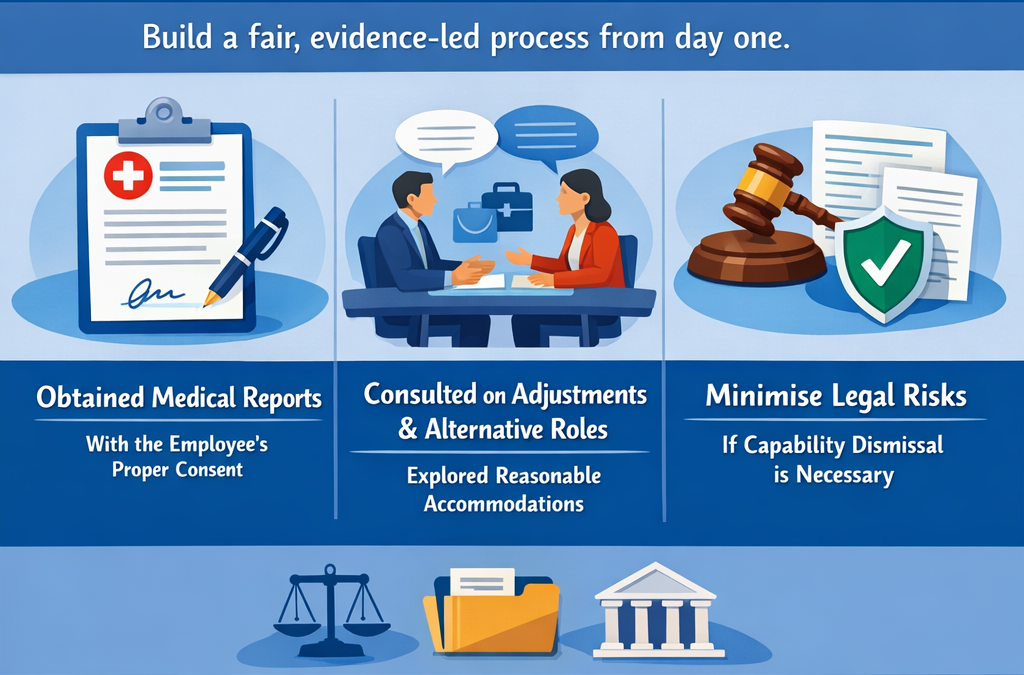
A 20-employee electrical installation firm we advised faced the long-term sickness absence of a senior employee following a serious injury. As part of the absence management process, we recommended seeking medical reports, with the employee’s consent, at each stage to track prognosis. Over several months we consulted extensively with the employee about reasonable adjustments, including reduced hours and modified duties, and explored suitable alternative roles across the business. No sustainable option emerged, and the medical evidence confirmed no realistic return date. Only then, after this thorough process, did the business proceed to a capability dismissal, a decision that held up when the employee later explored a claim.
Getting Medical Evidence and Consent Right
When managing sickness absence, Before requesting any medical report, get the employee’s written consent — a legal requirement under the Access to Medical Reports Act 1988, not just good practice. Employees can see the report first and request factual corrections, and Occupational Health reports carry the same consent expectations under UK GDPR. Screen for a possible disability throughout: once you know, or reasonably ought to know, a condition qualifies, you must consider adjustments before any formal step, since compensation here has no upper limit.
Screen every case for an underlying cause, get proper consent, and document each step. Get this right, and you protect your team, your reputation, and your business.
Need help Talk to our HR consultants today.